When I finally emerged into the tunnel it was late morning. I had not intended to go playing at all, but I positioned myself underneath the arches, where there is a good echo, and played Northumbrian small pipes. I play to practice, to play melodies; I gave up doing it for money long ago when the money dried up. I keep my brain active by playing all the tunes I know. This is an ever changing format, new tunes come and go and I revise them all the time.
These days I am memorizing Peacocks tunes, I hammer them into my memory by playing them over and over again, busking helps to play them well, as it is a performance, and I have to get it right. It is good to play new tunes, it refreshes the set, and it puts new life into an old rehearsed format. I rework the notes, rhythms, and style. I play them fast, slow and everything between, a reel becomes a hornpipe, a slip jig a jig then becomes a waltz… a hornpipe a slow air… I am free to improvise.
As the morning wore on I noticed out the corner of my eye another busker with a guitar standing at the other end of the tunnel, I cannot hear him, but it is cheeky. Normally a busker would not be down here standing so close, there is not the space for 2 musicians. In fact I have never seen another busker there for many years. No one goes there, it is not a good place to make money and it is dirty and dark. But he was singing with his guitar, moving positions, and stopping a lot. Then he was gone.
After a break at 2pm I went back to play a little more. I get tired from standing, and I play until I cannot stand much longer. After a few minutes I notice a few meters away a man, it is like he is on his holidays with a carrying case and bags. It looks like he is arranging his case, but he sits on the floor and there he stays.
He is homeless, he is begging, he just sits there a few paces away.
What to think? This is not the first time a homeless person has sat in this tunnel while I am playing. On one occasion it was nasty, the person had once threatened to “stick a knife in me” if I came back, and a few days later he had knifed another homeless person in the park. Others have told me to “fuck off”, but only this one had sat. I played on. I noticed a couple of his friends hanging around; a man passed and whispered “careful of your case”. Things where turning serious. I played on. No abuse, no threatening movements only silence, only looking on … waiting. As time went on more lost people where hanging around. The park is well known for homeless people at night.
I was called a “beggar” in the early 80s while playing. Thankfully those days are gone; I think people realize playing music is not an easy thing to do on the streets. And I have only had abuse from drunks and drug addicts this then. I guess some people see me also as a “beggar” as a “homeless person” but I am neither.
In the end I moved off, I had played enough, this man was turning a dirty tunnel into something else… something where music is not welcome. I better quit while I still had pipes to play.
I packed up and passed him. I thought him a fool; he chose a place where he would make no money… I was making it. He could have gone to the other end, but he sat in the dirt and dog piss, where he would make nothing while I was there. When I passed him he looked at me and I at him, he was the type who did not look after himself, a drunk and waist.er Let’s hope he gets lifted and put into a home… like so many others who had sat in his place. It is cruel to be kind as that is no life for anyone.
I wandered into the center of town, a large merry-go-round was pumping out music… was this the reason why the other busker had come down to the tunnel, to escape the noise? I heard a brass band playing amongst the noise, then they stopped, a police man had stopped them and told them to move… recorded music is ok but live music is not. They were 5 people from Rumania; they looked confused and lost, wandering off down the street with nowhere to play, it was time to go home.
Showing posts with label Northumbrian Small Pipes. Show all posts
Showing posts with label Northumbrian Small Pipes. Show all posts
Saturday, August 1, 2015

Wednesday, July 22, 2015
Rothbury Folk Festival 2015
The weekend started on the Thursday before the weekend by going through to Newcastleton, getting up early morning and going to Hexham and playing Northumbrian small pipes for 3 hours in the shopping precinct. Luckily there was not much disturbance and I played ok and got some good responses… always a bit uncertain as Northumbrian pipes in Northumbrian can be a bit like teaching English to the English! Before we left Hexham I visited a music shop (also music co-operative) where I knew they held workshops, I asked about holding my “Small pipe workshop” there, I had a positive response.
Then onto Rothbury Folk Festival, we got there about 5pm set up the tent and headed off for a session in the Queens Head pub. Due to a lot of background noise I opted for the Border pipes tunes.
Saturday was a quick listen to the town pipe band, then the Andy May Trio on the village stage, then off to the piper’s competition in the hall. It was full of people and a good turnout of performers. This year there was Border pipes competition. Listening to the Northumbrian pipers beginners and intermediate performers I noticed a lack of “drone tuning” therefore the pipes sounded horrible “TUNE YOUR DRONES TO THE CHANTER” it is basic stuff, the judges need to be more strickt about this.
After the duets we headed off to a small room above the Newcastle pub and played a few sets. It was funny really as Border pipers sat in one end of the room and the northumbrian pipers sat in the other end… they did not mix… of course they were friends, but musically there was no common ground. Different tunings (A verses F) loud and soft… except for a few tunes in G (one G border pipe and some had G Northumbrian).
Then off to the Queen’s again for an evening session. This lasted until about 01.30am for me then I wandered off back to the tent. Then a strange thing happened about an hour later I had strong car headlights on my tent, voices calling out “are you in there”. One of my fears in a car/tented campsite is that I get run over by drunken drivers. This seemed to be happening with a car nearly on top of me. I stuck my head out of the tent and there was a police car. They kindly shone a strong beam of light deliberately into my face and asked me “I had seen Andy, who wears a green arm cast?” I replied to the negative. There had been a police helicopter above wakening everyone up and I guess the infrared camera had singled me out as I walked home.
The Sunday was a good small session in the Queen’s lots of varied music and a mixture of styles and instruments and song, I played Northumbrian small pipes more here due to the lack of background noise.
An excellent weekend.
Then onto Rothbury Folk Festival, we got there about 5pm set up the tent and headed off for a session in the Queens Head pub. Due to a lot of background noise I opted for the Border pipes tunes.
Saturday was a quick listen to the town pipe band, then the Andy May Trio on the village stage, then off to the piper’s competition in the hall. It was full of people and a good turnout of performers. This year there was Border pipes competition. Listening to the Northumbrian pipers beginners and intermediate performers I noticed a lack of “drone tuning” therefore the pipes sounded horrible “TUNE YOUR DRONES TO THE CHANTER” it is basic stuff, the judges need to be more strickt about this.
After the duets we headed off to a small room above the Newcastle pub and played a few sets. It was funny really as Border pipers sat in one end of the room and the northumbrian pipers sat in the other end… they did not mix… of course they were friends, but musically there was no common ground. Different tunings (A verses F) loud and soft… except for a few tunes in G (one G border pipe and some had G Northumbrian).
Then off to the Queen’s again for an evening session. This lasted until about 01.30am for me then I wandered off back to the tent. Then a strange thing happened about an hour later I had strong car headlights on my tent, voices calling out “are you in there”. One of my fears in a car/tented campsite is that I get run over by drunken drivers. This seemed to be happening with a car nearly on top of me. I stuck my head out of the tent and there was a police car. They kindly shone a strong beam of light deliberately into my face and asked me “I had seen Andy, who wears a green arm cast?” I replied to the negative. There had been a police helicopter above wakening everyone up and I guess the infrared camera had singled me out as I walked home.
The Sunday was a good small session in the Queen’s lots of varied music and a mixture of styles and instruments and song, I played Northumbrian small pipes more here due to the lack of background noise.
An excellent weekend.
Tuesday, July 7, 2015
Newcastleton Folk Festival 2015 (review)
I had a different, and in many ways a better festival this year. I did not attend the sessions like I normally do. I found last year a bit frustrating with all the noise (drunks not music) and a lack of places to play (for quieter instruments) all added to me walking aimlessly around. This year was different the organizers had added new venues to the places to play, one was a “quiet room” not in the main square (away from the pubs) but where you could have a tune. Also there were fewer drunks there this year and possibly less musicians (?) so I could find places to play.
I found the marquee empty on a Saturday morning so I played my Northumbrian small pipes, I played and played and slowly people began to sit down, after 2 hours of playing the tent was getting full, a few more musicians arrived and added more… then I left, found another piper and played on the grass (Border pipes and Scottish small pipes) and spoke to some people about the festival, piping and things in general. I met with a Northumbrian piper and had a few tunes together.
The after-hours sessions were great, songs and music, which went on until the early hours (got to bed 3am both nights) and on the Sunday night the “survivors session” we finally got out at 5.30am... and excellent sessions (I even sang while playing the pipes… a rare occasion).
The workshop went well, 10am to 12.30pm was useful to the students and myself (I even got a hug off one of them) what was apparent was the lack of contact the individual pipers had (isolation) and no advice or after care help; something they found the workshop was useful for. After the workshop we chatted and played until about 4pm!
I learn a lot too about my pipes and the adjustments I need to make, but the comments about the pipes were good and positive. I will make some mouth blown pipes too incase they will be needed. I will look for more festivals in the future and other venues to attract the students.
I found the marquee empty on a Saturday morning so I played my Northumbrian small pipes, I played and played and slowly people began to sit down, after 2 hours of playing the tent was getting full, a few more musicians arrived and added more… then I left, found another piper and played on the grass (Border pipes and Scottish small pipes) and spoke to some people about the festival, piping and things in general. I met with a Northumbrian piper and had a few tunes together.
The after-hours sessions were great, songs and music, which went on until the early hours (got to bed 3am both nights) and on the Sunday night the “survivors session” we finally got out at 5.30am... and excellent sessions (I even sang while playing the pipes… a rare occasion).
The workshop went well, 10am to 12.30pm was useful to the students and myself (I even got a hug off one of them) what was apparent was the lack of contact the individual pipers had (isolation) and no advice or after care help; something they found the workshop was useful for. After the workshop we chatted and played until about 4pm!
I learn a lot too about my pipes and the adjustments I need to make, but the comments about the pipes were good and positive. I will make some mouth blown pipes too incase they will be needed. I will look for more festivals in the future and other venues to attract the students.
Thursday, July 2, 2015
Completed Small Pipes for Newcastleton Folk Festival 2015
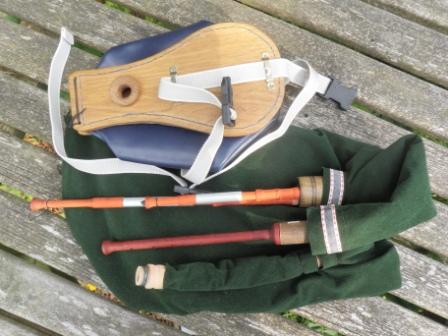
There are 7 completed Small pipes for the Newcastleton Folk Festival. I have covered most of the bellows with a fabric except for 2 of them.
 Bubinga chanter, cherry and cedar drones. The bellows were donated by a friend this is the only item that I did not make.
 Indian Red Wood chanter and drones, the deeper colour on the chanter is due to oiling. The bellows I made in 1994 in Lithuania
 Bubinga chanter and drones, cedar wood decoration on drones
 Cherry chanter and drones, walnut wood decorations on drones
 Bubinga chanter, cherry drones with Indian red wood decorations
 Indian red wood chanter and drones, cherry wood decorations on drones, cedar wood decoration on chanter
 Cedar chanter and drones, this was the first bagpipe I made in Spain in 2014



Wednesday, June 10, 2015
Making Bagpipes: Workshop Leaflet
A leaflet will be given out at the workshop giving contact details and letting people know about other workshop ideas...
"The intension of the workshop is promote the Small pipe tradition to people who have an interest in learning the Northumbrian Small pipes, Scottish Small pipes, Leicestershire Small pipes and other types of bellow-blown pipes. The aim is to provide sets of pipes to develop the student’s playing techniques and offering 3 levels of classes:
The 1st level is the total beginner’s workshop to show the techniques for starting to play.
The 2nd level is a workshop to introduce tunes from the Scottish Borders.
The 3rd level is to teach more demanding tunes and build a varied repertoire.
Within the 3rd level there is the opportunity for the student to buy their small pipes and to continue the classes privately.
(The small pipes in the workshop are made by myself and are of different quality depending on the level of workshop).
To learn more about the musical activities, concerts, lessons and workshops visit my web page http://ethnopiper.blogspot.co.uk or email me at ethnopiper@gmail.com"
"The intension of the workshop is promote the Small pipe tradition to people who have an interest in learning the Northumbrian Small pipes, Scottish Small pipes, Leicestershire Small pipes and other types of bellow-blown pipes. The aim is to provide sets of pipes to develop the student’s playing techniques and offering 3 levels of classes:
The 1st level is the total beginner’s workshop to show the techniques for starting to play.
The 2nd level is a workshop to introduce tunes from the Scottish Borders.
The 3rd level is to teach more demanding tunes and build a varied repertoire.
Within the 3rd level there is the opportunity for the student to buy their small pipes and to continue the classes privately.
(The small pipes in the workshop are made by myself and are of different quality depending on the level of workshop).
To learn more about the musical activities, concerts, lessons and workshops visit my web page http://ethnopiper.blogspot.co.uk or email me at ethnopiper@gmail.com"
Friday, June 5, 2015
Bagpipe Making: Small Drone Parts
I have been making ‘small drone parts’ over the past few days. The original plan was only to have bass drones for the workshop, but the small drone adds to the techniques and is an important part in learning how to play. It can be a little difficult tuning a 2nd drone easily and successfully, an out of tune drone is annoying as an out of tune chanter, so tuning ones ear to a harmony can be useful to know.
I am experimenting with woods, mixing them together, joining them together and playing with outer designs. I do like making the wooden parts.
I made another bellow, still trying different techniques out, experimenting with different glues and ways of assembling in a less messy manner.
If I get the time I will use it with the workshop, but at the moment I am finalizing 7 sets and if I can squeeze in an 8th all well and good.
I am experimenting with woods, mixing them together, joining them together and playing with outer designs. I do like making the wooden parts.
I made another bellow, still trying different techniques out, experimenting with different glues and ways of assembling in a less messy manner.
If I get the time I will use it with the workshop, but at the moment I am finalizing 7 sets and if I can squeeze in an 8th all well and good.
Tuesday, June 2, 2015
Bagpipe Making: Tuning Chanters
The chanters are being tested to see if they are in the right key. My original idea was to have them all playing in the key of D (a common key for sessions) but after assembling them and testing them out I am finding they are quiet for sessions (due to wood type and reed limitations). So I am forgetting about unifying the chanters in the same key, I will make each of them in tune with the drones so each player can practice by alone (and not as a group).
Thinking more about it this makes more sense as anyone coming with their own small-pipe will be in a different tuning (possibly F, C, Bb, G, A) to my D set, it only takes 1 key difference to make the group sound discordant. I cannot cater for this. It will be easier to ask the student to play alone, and I can see to them individually, and occasionally to get them together as a group for general discussion.
The workshop will not only be “hands on” practice, but informative with maintenance tips, buying guide, types of pipes etc. a general introduction. It is catering for the “person who is intending to own a set of Small pipes in the future”. This workshop cannot give them hours of practice (which is what is needed) it can give them ideas on what to look out for and to suggest the steps to practice when they have their own sets.
Thinking more about it this makes more sense as anyone coming with their own small-pipe will be in a different tuning (possibly F, C, Bb, G, A) to my D set, it only takes 1 key difference to make the group sound discordant. I cannot cater for this. It will be easier to ask the student to play alone, and I can see to them individually, and occasionally to get them together as a group for general discussion.
The workshop will not only be “hands on” practice, but informative with maintenance tips, buying guide, types of pipes etc. a general introduction. It is catering for the “person who is intending to own a set of Small pipes in the future”. This workshop cannot give them hours of practice (which is what is needed) it can give them ideas on what to look out for and to suggest the steps to practice when they have their own sets.
Wednesday, May 20, 2015
Bagpipe Making: Help in Making, near Completion
What a difference a few days make when someone comes and helps with the making. Leila flew over from Spain to help with the sewing of the outer bags; she also helped with other aspects of making. By the end of the 3 days we completed all of the assembly, the finer tasks of clack valves, blow pipes, belts for bellows, decoration on the bellows, a new design for the bellows, and securing the wooden drone parts to the metal sliding section.
What is left to do is to drill and fine tune the chanters against the drones, and complete making the reeds. Last week I was wondering if I could complete everything in time but having someone help and encourage and just to bounce ideas helped get through the mountain of jobs that often overwhelmed me. Sometimes, I just froze due to the amount of jobs still to do.
1 bag had to be discarded due to leaking. It was an old bag, an experiment from Spain. It will be easier to make a new bag with the current method than to try and find the leaks.
The next jobs will be tuning of the chanters and making reeds for the drones. It is the last and trickiest task to do.
What is left to do is to drill and fine tune the chanters against the drones, and complete making the reeds. Last week I was wondering if I could complete everything in time but having someone help and encourage and just to bounce ideas helped get through the mountain of jobs that often overwhelmed me. Sometimes, I just froze due to the amount of jobs still to do.
1 bag had to be discarded due to leaking. It was an old bag, an experiment from Spain. It will be easier to make a new bag with the current method than to try and find the leaks.
The next jobs will be tuning of the chanters and making reeds for the drones. It is the last and trickiest task to do.
Wednesday, May 6, 2015
Bagpipe Making: Bellows (1)
I finished gluing the leather to the cheeks of the 1st bellow, and then I left it to dry over night. It was beginning to look like the finished bellow. Instead of screwing the leather to the cheeks, I inserted safety pins into the cheeks to hold the leather while the glue dried. This worked very well and took a lot quicker to do. I can simply pull the pins out and insert the screws later then the glue is dry.
I then started on the 2nd bellow (my own design). I connected the two ends of the leather by stitching and smearing silicone between the folds and over the stitching, and left it to dry over night.
The glued cheek covering (a green velvet) that was done the previous day had glued smooth and came out nice.
I took the stocks out of the bags, ready for dying them to give them some uniformity in design.
I then started on the 2nd bellow (my own design). I connected the two ends of the leather by stitching and smearing silicone between the folds and over the stitching, and left it to dry over night.
The glued cheek covering (a green velvet) that was done the previous day had glued smooth and came out nice.
I took the stocks out of the bags, ready for dying them to give them some uniformity in design.
Tuesday, May 5, 2015
Bagpipe Making: Bellows
I had some success yesterday, I began by redrawing the plans for the new bellow cheeks, and I also standardized the plans for the leather, ignoring the Northumbrian style as well as the Irish bellow style. I thought why not experiment with my own style.
After drawing the plans, I cut the leather to the new plans.
I started on the Irish bellows, I glued the leather to the cheeks first instead of adding the screws to the cheeks, and then I loosely place the screws to keep the leather in place, and left it to dry for 24 hours.
I drilled the new holes in the new bellow cheeks and put a covering over the wood for decoration.
I then went to the lathe and finished off the bass drone, my best yet, a nice combination of woods (bubinga and cedar).
After drawing the plans, I cut the leather to the new plans.
I started on the Irish bellows, I glued the leather to the cheeks first instead of adding the screws to the cheeks, and then I loosely place the screws to keep the leather in place, and left it to dry for 24 hours.
I drilled the new holes in the new bellow cheeks and put a covering over the wood for decoration.
I then went to the lathe and finished off the bass drone, my best yet, a nice combination of woods (bubinga and cedar).
Sunday, May 3, 2015
Bellow Trouble
Sometimes the work can go smoothly, other times like today it can be really slow and frustrating. The final bass drone is still yet to be completed due to the gluing of the ornamentation.
The fixing of the leather to the bellow cheeks had to be postponed due to the cheeks splitting/cracking. I had to cover the cheek with glue; hopefully this will seal and strengthen the sides making the wood stronger for the screws to go in without splitting the wood. I do not want to revert to the traditional Northumbrian method as I know this works; I want to try new things out. But it is a very slow process having to measure the leather around the cheeks, then sealing and sewing the two ends of the leather together (which I did today), then fixing the leather to the edges of the cheeks.
I do not want to abandon the process just yet, I want to see if I can do it, but it is a method I will not try in the future. Irish pipers have this method for making their bellows, it works fine for them, but for me I need a different system for making bellows.
My own system I will try, straight after I have completed the ‘Irish method’. I have started it already but it is taking time due it is my first try and I am working ‘blind’, after this one it should be smoother.
I dyed and varnished the stocks to make them seem uniform in the bags. This is not essential but from afar it will look presentable; they look like a dark oak colour now.
The fixing of the leather to the bellow cheeks had to be postponed due to the cheeks splitting/cracking. I had to cover the cheek with glue; hopefully this will seal and strengthen the sides making the wood stronger for the screws to go in without splitting the wood. I do not want to revert to the traditional Northumbrian method as I know this works; I want to try new things out. But it is a very slow process having to measure the leather around the cheeks, then sealing and sewing the two ends of the leather together (which I did today), then fixing the leather to the edges of the cheeks.
I do not want to abandon the process just yet, I want to see if I can do it, but it is a method I will not try in the future. Irish pipers have this method for making their bellows, it works fine for them, but for me I need a different system for making bellows.
My own system I will try, straight after I have completed the ‘Irish method’. I have started it already but it is taking time due it is my first try and I am working ‘blind’, after this one it should be smoother.
I dyed and varnished the stocks to make them seem uniform in the bags. This is not essential but from afar it will look presentable; they look like a dark oak colour now.
Friday, May 1, 2015
Cheeks for New Bellows
Today I glued the bass drone pieces together using bubinga and cedar woods, it looks attractive. I will shape it tomorrow then I will have the 7 bass drones made.
I made 7 bellows cheeks today, cut them and sanded them down ready to apply the material. I did away with the curved ends; I want my own design, something to make them a little different. The construction is my own idea, so I might as well make the design a little different too.
The glued fabric on the 2 bellows cheeks I did yesterday was a success, it is ready to apply the “leather” part now…. the tricky bit.
I made 7 bellows cheeks today, cut them and sanded them down ready to apply the material. I did away with the curved ends; I want my own design, something to make them a little different. The construction is my own idea, so I might as well make the design a little different too.
The glued fabric on the 2 bellows cheeks I did yesterday was a success, it is ready to apply the “leather” part now…. the tricky bit.
Workshop Venue
Yesterday I completed shaping another bass drone this time with bubinga
and cherry. After taking advice from the “Bagpipe Makers Exchange” forum, I
began different tasks to rest the eyes and mind so not to make too many
mistakes in the future.
I worked on the bellows by drilling the outlet holes and gluing fabric over the cheeks and letting them dry for 24 hours. Then I went back to the bass drone making, cutting the wood, long boring and shaping it down to 19mm. This will be my 7th and final bass drone for the workshop.
At Newcastleton, I looked around the venue space where the workshop will be held. There was a leather couch type seating around the wall which is good for spacing out the students so their pipes will not overlap each other too much.
The room also took me back to the 1980s Festivals where they used to hold the Northumbrian small pipe competitions, times change, next year it will no longer be a venue but flats.
I worked on the bellows by drilling the outlet holes and gluing fabric over the cheeks and letting them dry for 24 hours. Then I went back to the bass drone making, cutting the wood, long boring and shaping it down to 19mm. This will be my 7th and final bass drone for the workshop.
At Newcastleton, I looked around the venue space where the workshop will be held. There was a leather couch type seating around the wall which is good for spacing out the students so their pipes will not overlap each other too much.
The room also took me back to the 1980s Festivals where they used to hold the Northumbrian small pipe competitions, times change, next year it will no longer be a venue but flats.
Sunday, April 26, 2015
Bass Drone and Bent Reamer
I finished off the bass drone from yesterday, it was gluing over night and today I turned it down and added decoration. There is a mixture of woods: European cedar and cherry, a white wood mixed with a light pink wood, it looks nice. That makes 5 bass drones in total completed.
An accident occurred yesterday as I was re-boring the drones to clean out some chaff. The reamer came out of the lathe and hit the tool rest; the reamer was bent and came out of the chuck. It happened so fast I could do nothing, luckily I have another. Was it tiredness which made me not fix it securely or just one of those things?
Today, I used the Visio programme and redesigned the measuring and cutting of the bubinga wood for another bass drone. I will mix the woods again, this time using the cherry as a contrast wood to the bubinga.
I long bored the bubinga and choose a piece of cherry to complete the length of the drone. I will try and join them now and glue them before I leave for a folk session at Monkhill tonight.
An accident occurred yesterday as I was re-boring the drones to clean out some chaff. The reamer came out of the lathe and hit the tool rest; the reamer was bent and came out of the chuck. It happened so fast I could do nothing, luckily I have another. Was it tiredness which made me not fix it securely or just one of those things?
Today, I used the Visio programme and redesigned the measuring and cutting of the bubinga wood for another bass drone. I will mix the woods again, this time using the cherry as a contrast wood to the bubinga.
I long bored the bubinga and choose a piece of cherry to complete the length of the drone. I will try and join them now and glue them before I leave for a folk session at Monkhill tonight.
Saturday, April 25, 2015
Drone Design with Computers
I spent too much time over a drone yesterday. The boring and rough turning was done the day before, so all was left to do was shape it, but this is where the time went, designing and turning all has to be done in my head then acted upon; and since it has been months since I had made a drone I was again remembering how to do it. I had altered the design since last time too by using new measurements and new forms; using my chisels instead of the tool post and cutters. It was a success, it looked ok, until the last piece was to be turned and here (again) tiredness took over and I glued the finishing piece and left it for the night. I should have left the gluing until today, as it was not long enough. Not to worry the beauty about wood is that you can redo it.
Later I decided to revisit the design of the drone, not in my head, but on the computer by using a “vsd” format. This allows quite detailed drawings to be experimented with, and a working blueprint to be achieved ‘on paper’. So I am hoping today I will have gained some time and drones will not take so much time.
I started working on my new idea for the bellows, I submerged the wood into a barrel of water to make it more supple, then I laid heavy weights on it to iron out any lumps and bumps, and then let it to dry.
Later I decided to revisit the design of the drone, not in my head, but on the computer by using a “vsd” format. This allows quite detailed drawings to be experimented with, and a working blueprint to be achieved ‘on paper’. So I am hoping today I will have gained some time and drones will not take so much time.
I started working on my new idea for the bellows, I submerged the wood into a barrel of water to make it more supple, then I laid heavy weights on it to iron out any lumps and bumps, and then let it to dry.
Thursday, April 23, 2015
Drone Configuration and Melody Types
An interesting talk with a young piper yesterday in Carlisle prompted me to write a little about drone tuning. Our conversation centered on the types of drones one should use and for which melodies. He was interested in using the drone configuration of A, d’, a’’ (Bass A, tenor D, alto A) with his ‘A’ Scottish small pipes. This drone configuration is not unusual in the European style but it is with Scottish small pipes. When I first heard about it I was skeptical, there would be a clash of sounds, but it was not as bad as what I thought as I listened to him play.
The problem is the amount of melodies he could play, not many would fit the harmonic arrangement. The Highland tunes would be more willing to blend in with the drones especially the one which were routed in the D note, but the Northumbrian and Border melodies that used the C# (3rd note of the A scale) a lot clashed with the D drone. He thought it sounded ok, but I begged to differ.
When I started to play the Northumbrian small pipes in G I looked for melodies that played with the A drones (a’, a’’) there was not many melodies either, the root note of the melody being the A note on the chanter. With the drone playing the root note it harmonized with the rest of the scale. Not a problem.
My young friend was interested in a small pipe that “fitted all situations”, I was too, many years ago and in some respects the addition of owning chanters reflect this still. But perhaps this has been tried before, in the past, and the best that was achieved by the tradition was a drone configuration of A, a’, a’; giving a strong root note for different types of modes/scales to be explored. For me it was interesting to see a “work in progress” but I wonder if it will be followed up in a few years time… I hope so.
The problem is the amount of melodies he could play, not many would fit the harmonic arrangement. The Highland tunes would be more willing to blend in with the drones especially the one which were routed in the D note, but the Northumbrian and Border melodies that used the C# (3rd note of the A scale) a lot clashed with the D drone. He thought it sounded ok, but I begged to differ.
When I started to play the Northumbrian small pipes in G I looked for melodies that played with the A drones (a’, a’’) there was not many melodies either, the root note of the melody being the A note on the chanter. With the drone playing the root note it harmonized with the rest of the scale. Not a problem.
My young friend was interested in a small pipe that “fitted all situations”, I was too, many years ago and in some respects the addition of owning chanters reflect this still. But perhaps this has been tried before, in the past, and the best that was achieved by the tradition was a drone configuration of A, a’, a’; giving a strong root note for different types of modes/scales to be explored. For me it was interesting to see a “work in progress” but I wonder if it will be followed up in a few years time… I hope so.
Drones, Bellows and Reeds
I have not turned any drones for a couple of months so yesterday morning I had to spend most of my time trying to remember how to do it, or in what order I should do it. Also, within those months I have changed my making process and now I do things differently. What is the point (besides documentation) in writing anything down, to remember the process, when it is changing all the time?
With the new drill I bought the boring and drilling went very well, I did 2 sections of wood which will become a tenor drone.
Later that day I got given some wood which will become bellow cheeks. A change of design has been growing in my mind for several weeks now, to make the design of the bellows more airtight. My present system is an adaptation of the traditional method, but I have this idea and it will not go away! What I need to do is try it out, and this wood will be ideal for that. The process is not quicker but I believe it will be a cleaner and more secure/airtight that the traditional method.
I bought screws for the bellows cheeks, not the ones I was looking for, but they will do for the traditional bellows. This is the problem of making pipes in 2 countries (Spain and the UK), there is not the same product in both countries, not the same measurements and not the same price, and availability is not the same either. These screws will do for now until I can source better ones.
Later on that afternoon, I met a piper and we went to the park in Carlisle, the meeting was an interesting one but for the point of this blog I noticed that the reed I had made was not so bad. It was louder than what I had thought and the tone was sweeter. There were some problems with it (too sharp in the chanter) but from the point of view of making I was pleased.
With the new drill I bought the boring and drilling went very well, I did 2 sections of wood which will become a tenor drone.
Later that day I got given some wood which will become bellow cheeks. A change of design has been growing in my mind for several weeks now, to make the design of the bellows more airtight. My present system is an adaptation of the traditional method, but I have this idea and it will not go away! What I need to do is try it out, and this wood will be ideal for that. The process is not quicker but I believe it will be a cleaner and more secure/airtight that the traditional method.
I bought screws for the bellows cheeks, not the ones I was looking for, but they will do for the traditional bellows. This is the problem of making pipes in 2 countries (Spain and the UK), there is not the same product in both countries, not the same measurements and not the same price, and availability is not the same either. These screws will do for now until I can source better ones.
Later on that afternoon, I met a piper and we went to the park in Carlisle, the meeting was an interesting one but for the point of this blog I noticed that the reed I had made was not so bad. It was louder than what I had thought and the tone was sweeter. There were some problems with it (too sharp in the chanter) but from the point of view of making I was pleased.
Wednesday, April 22, 2015
Removable Chanter Stocks
Yesterday I made 5 removable chanter stocks; these stocks are made for each chanter so they protect the reed if removed from the bag.
In hindsight I could have made only the bag/chanter stock, but this is not only about the workshops, it is also about learning and creating a finish product I am pleased with. The bag/chanter stock would have been quicker but the chanter would have to fit each chanter stock exactly and I would not be able to interchange the chanters in different bags if there were any deviation in size. This might have been limiting if a student wants to try Northumbrian fingering and then they want to try Scottish small pipe fingering… they would have to change bags, bellows etc. which is all time consuming. With the removable option I can simple take one chanter out of the bag and add it to another without damaging the reed (most damage done to the reed is when it is removed from the bag).
As I was completing the 4th stock it suddenly jumped out of the chuck in the lathe and crushed itself against the tool post. Tiredness and lack of concentration can be dangerous. It is the first ruined piece of work so far… well there has been many failed experiments but this was my first broken experiment. It was a valuable lesson “take a break and rest”. Bad things happen very fast indeed!
In hindsight I could have made only the bag/chanter stock, but this is not only about the workshops, it is also about learning and creating a finish product I am pleased with. The bag/chanter stock would have been quicker but the chanter would have to fit each chanter stock exactly and I would not be able to interchange the chanters in different bags if there were any deviation in size. This might have been limiting if a student wants to try Northumbrian fingering and then they want to try Scottish small pipe fingering… they would have to change bags, bellows etc. which is all time consuming. With the removable option I can simple take one chanter out of the bag and add it to another without damaging the reed (most damage done to the reed is when it is removed from the bag).
As I was completing the 4th stock it suddenly jumped out of the chuck in the lathe and crushed itself against the tool post. Tiredness and lack of concentration can be dangerous. It is the first ruined piece of work so far… well there has been many failed experiments but this was my first broken experiment. It was a valuable lesson “take a break and rest”. Bad things happen very fast indeed!
Monday, April 20, 2015
Stocks and Newcastleton Folk Festival... it's on !
At the end of the day I had 5 stocks completed, the drilling on the wood lathe went ok but the shaping and finalizing the stocks on the metal work lathe took the time. Also I had problems with the motor, it kept on speeding up then slowing down, I had to reduce the rpms to keep it stable, and so I was cutting slower. Anyways, it is progress and still on schedule.
Today I finalized the dates of the workshop at Newcastleton Folk Festival, so it is official, I will be giving a beginners workshop on the “Bellows blown Small-pipes”. The aim of the workshop is to introduce the student to the techniques of bellows blown piping, with ideas on bellows technique, bag pressure, holding a note, keeping the drones steady, and if there is time playing a scale… basically everything except learning melodies….that is for another workshop. With these techniques one can adapt to any of the bellows blown bagpipes (Irish, Border, Northumbrian, Scottish Small pipes, Pastoral, Dudy, Cornemuse, Mussette, etc.), as the basics are the same. If you are buying a set of bellows blown pipes with these techniques you can see if the pipes are in tune, working, playable… without the basic techniques this is impossible.
Today I finalized the dates of the workshop at Newcastleton Folk Festival, so it is official, I will be giving a beginners workshop on the “Bellows blown Small-pipes”. The aim of the workshop is to introduce the student to the techniques of bellows blown piping, with ideas on bellows technique, bag pressure, holding a note, keeping the drones steady, and if there is time playing a scale… basically everything except learning melodies….that is for another workshop. With these techniques one can adapt to any of the bellows blown bagpipes (Irish, Border, Northumbrian, Scottish Small pipes, Pastoral, Dudy, Cornemuse, Mussette, etc.), as the basics are the same. If you are buying a set of bellows blown pipes with these techniques you can see if the pipes are in tune, working, playable… without the basic techniques this is impossible.
Stocks, Stocks and more Stocks
I realize I am starting late in documenting my attempts at making “small pipes” it is better to start now while I am still in the process of making, than to leave it and forget what I have done. The idea is to make at least 6 sets of small pipes to use in workshops at folk festivals. I think between 6 and 10 sets are a realistic number, 6 being the minimum to start with then increase it if I have the time. I get the chance to give my first workshop at the Newcastleton Folk Festival in July 2015.
There has been a lot of experimentation over the past year, but a few months ago when I was told I could do the workshop I had to get together the experiments (that worked) and start assembling them. I should also add that most of these experiments were done in Madrid, Spain. There I had tools and wood easily to hand, on returning to the UK I had to source all the materials again and things were harder to find here, and some things were not possible to get, so I had to begin again and experiment. Time was running out but today I thought to allocate time to each stage, for example last week and this week I dedicate my time to making stocks and by the end of the week I move onto the next stage eg. Drones. By this method I should complete at least some if not all of the small pipes in time, leaving enough time for tuning! So I began today by making stocks for each bag that did not have them, and I will work my way through the missing stocks systematically until all have them.
I have made 6 bags so far (I have made more, if I need them), I have inserted some of the chanter stocks, blow pipe stocks and drone stocks, but as I go along I notice I have to do little changes to them. For example, originally I had made the internal diameter of the blowpipe sock 16mm but I later noticed that it would have been better to make it 18mm so I have to enlarge it. Not big jobs but multiply it by 6 it can take a few hours. This is what I mean by “experiments”.
Today I made 4 bag stocks: 3 chanter stocks and 1 drone stock. The drone stock took most of the day due to slowly boring the stock then shaping the outside. I had an old bag which was precut, so I had to match the diameter of the hole in the bag, I did not have a large diameter piece of wood and when I found one it took some time to prepare it for drilling.
The 3 chanter stocks were not a problem; these can be tired into the bags when I get some better twine. This will complete what is required for the 6 sets.
This morning I placed the 6 bags on the floor and placed beside them the things I have made so far. I had made about 3 sets but something was wrong with all of them, so I will have to take the stocks out of the bags and redo them at a later date. It was a useful exercise as I could write down what is still needed to do, and what things I need to prioritize. The 3 bellows I have already are nearly complete I need to make one more here (as I have the cheeks cut already) and do the rest in Spain.
There has been a lot of experimentation over the past year, but a few months ago when I was told I could do the workshop I had to get together the experiments (that worked) and start assembling them. I should also add that most of these experiments were done in Madrid, Spain. There I had tools and wood easily to hand, on returning to the UK I had to source all the materials again and things were harder to find here, and some things were not possible to get, so I had to begin again and experiment. Time was running out but today I thought to allocate time to each stage, for example last week and this week I dedicate my time to making stocks and by the end of the week I move onto the next stage eg. Drones. By this method I should complete at least some if not all of the small pipes in time, leaving enough time for tuning! So I began today by making stocks for each bag that did not have them, and I will work my way through the missing stocks systematically until all have them.
I have made 6 bags so far (I have made more, if I need them), I have inserted some of the chanter stocks, blow pipe stocks and drone stocks, but as I go along I notice I have to do little changes to them. For example, originally I had made the internal diameter of the blowpipe sock 16mm but I later noticed that it would have been better to make it 18mm so I have to enlarge it. Not big jobs but multiply it by 6 it can take a few hours. This is what I mean by “experiments”.
Today I made 4 bag stocks: 3 chanter stocks and 1 drone stock. The drone stock took most of the day due to slowly boring the stock then shaping the outside. I had an old bag which was precut, so I had to match the diameter of the hole in the bag, I did not have a large diameter piece of wood and when I found one it took some time to prepare it for drilling.
The 3 chanter stocks were not a problem; these can be tired into the bags when I get some better twine. This will complete what is required for the 6 sets.
This morning I placed the 6 bags on the floor and placed beside them the things I have made so far. I had made about 3 sets but something was wrong with all of them, so I will have to take the stocks out of the bags and redo them at a later date. It was a useful exercise as I could write down what is still needed to do, and what things I need to prioritize. The 3 bellows I have already are nearly complete I need to make one more here (as I have the cheeks cut already) and do the rest in Spain.
Subscribe to:
Posts (Atom)